I picked a Surface Laptop 7 for sustainability. Then I decided to fact check myself.
I was polishing a session on Intune device management and I realized I´d been recommending the Surface Laptops to customers as a sustainable choice mostly from muscle memory and good vibes. That bugged me. So I did what I always do, pulled a thread and kept tugging until I could either defend my choice, or change it!
First gut check: Do Microsoft´s big climate promises actually touch devices?
Microsoft´s sustainability headline is bold: carbon negative, water positive, and zero waste by 2030, with a commitment to also by 2050, remove our historical emissions since our founding in 1975. That’s not just a datacenter mantra, it´s supposed to extend to “how we build products and source materials” You can find more info on Sustainability | Microsoft
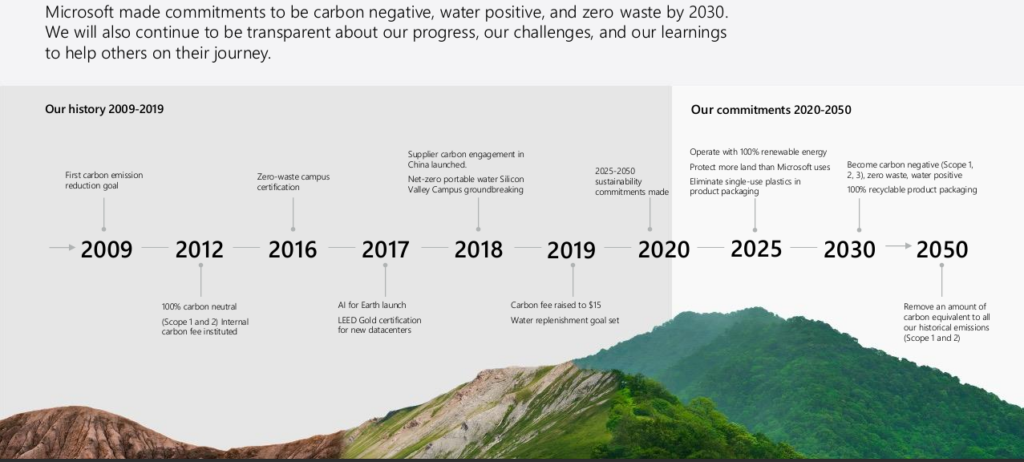
We´re halfway to 2030, and Microsoft says it´s buying huge amounts of clean energy and expanding carbon‑removal efforts. They publish a yearly Environmental Sustainability Report that shows both progress and where they fall short. If our devices aren´t connected to those systems, they barely make a difference. But if they are, then even the laptop in my bag becomes part of a much larger effort moving in the right direction. You can follow the progress on the same sustainability page as above.
I must say, I´m impressed by the work that has been done already.
The hypothesis: Surface Laptop 7 should have measurable, product‑level sustainability
To verify this, I had a look at the Sustainability at Surface page. Microsoft has built a dedicated sustainability program for Surface devices, and they make specific, measurable claims about the materials and energy used in the newest models. The idea is simple: the more recycled materials and clean energy used before a device reaches you, the lower its total environmental footprint becomes. For example, the latest Copilot+ Surface models include several verified sustainability measures:
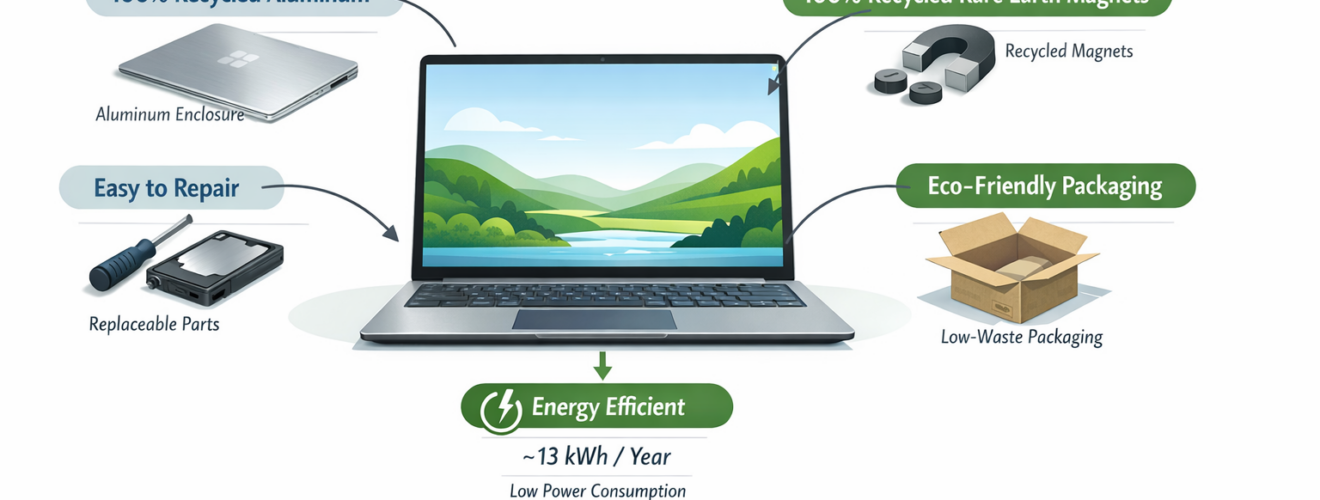
- 100% recycled aluminum alloy in the device enclosure
- 100% recycled rare‑earth metals in the magnets
- 100% recycled cobalt in the battery cell
- 40% of key device suppliers running on carbon‑free electricity (FY24)
- Product‑specific Eco Profiles that document energy use, materials, and emissions
- Reduced packaging volume and increased use of recyclable materials
- Design improvements that make devices easier to repair and extend their lifespan
These are examples of upstream sustainability, the work that happens long before the device is in your hands. If these claims are verified per model, they can make a real difference in the overall environmental impact of each device.
This sounds promising for my laptop!
So what’s actually inside my Surface Laptop 7 that makes it more sustainable?
To figure that out, I downloaded the official Eco Profile for the Surface Laptop 13.8″ (7th Edition). It’s a PDF that summarizes the real environmental data behind the device, not marketing language, but the numbers Microsoft reports for carbon footprint, materials, and energy use.
Here’s what the Eco Profile reveals in simple terms:
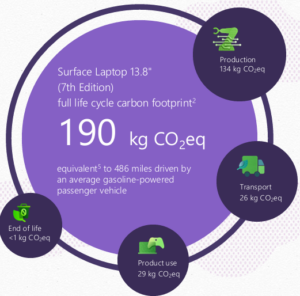
The total carbon footprint of the device
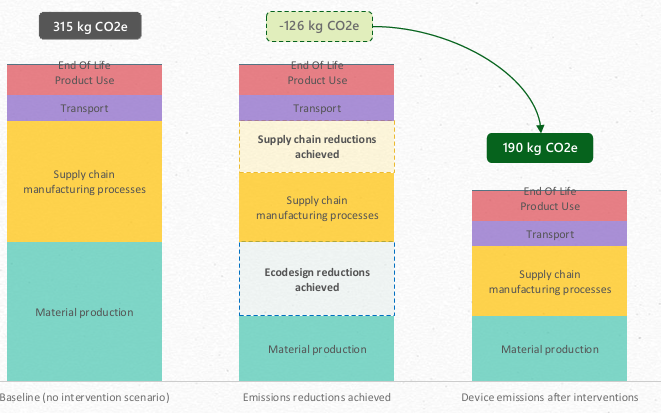
The full “cradle‑to‑grave” carbon footprint, from materials and manufacturing to shipping, 4.5 years of use, and recycling is:
- 190 kg CO₂‑equivalent for the base configuration
High levels of recycled materials
The laptop uses a surprisingly large amount of recycled content, and Microsoft quantifies it clearly:
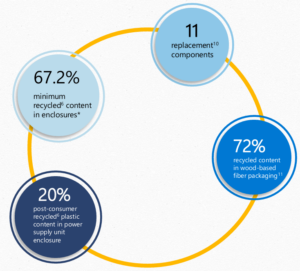
- 67.2% recycled content in the enclosure
- 100% post‑industrial recycled aluminum in two major enclosure parts
- 100% recycled rare‑earth metals in the magnets
A measurable reduction in emissions compared to a baseline
Microsoft didn’t just swap materials, they modeled the impact. According to the Eco Profile:
- 40% lower lifecycle emissions compared to a baseline scenario through several ecodesign (material and design) and supply chain interventions.
- 74 kg CO2eq saved by using recycled materials
- 52 kg CO2eq saved by switching key suppliers to 100% carbon‑free electricity
Energy use: a hidden part of a device footprint
When you manage thousands of laptops, the electricity they use over their lifetime can quietly add up, especially in countries where the electricity grid has a high carbon footprint. That´s why the When you manage a large fleet of laptops, the electricity they use over their lifetime can quietly become a major part of your total emissions, especially in countries where the electricity grid is carbon‑intensive. That´s why the “use phase” matters more than people often assume.
Surface devices are built to meet strict energy‑efficiency standards like ENERGY STAR and EPEAT Gold, which helps keep electricity use low. Microsoft’s Eco Profiles make this practical by giving you the estimated annual energy consumption for each device. For my Surface Laptop 7 (13.8″, 7th Edition), the Eco Profile lists:
- ~13 kWh per year of electricity use
That number becomes meaningful when you multiply it across hundreds or thousands of endpoints, and when you apply your country´s specific carbon‑intensity factor. I´m lucky to live in a country that has invested a lot in green energy. But it´s a good number to use in calculations
Packaging: ditching plastic and telling you what´s inside
Microsoft has set three big sustainability goals for its device packaging:
- Remove all single‑use plastics by 2025 (This is now)
- Use only certified, sustainably sourced wood‑fiber materials by 2025 (This is also now)
- Make all packaging 100% recyclable by 2030
These goals matter because packaging is one of the easiest places to reduce waste at scale — every device ships in a box, and millions of boxes add up quickly.
Surface product pages and Eco Profiles now highlight the progress: for example, the Surface Laptop 7 packaging contains a minimum of 72% recycled wood‑fiber content, which shows that Microsoft is actively moving toward the 2025 targets. They’re close, but not all packaging across all product lines is confirmed plastic‑free yet! But they are working on it. That’s not flashy sustainability, it´s the practical, operational kind that makes a real difference when multiplied across global shipments.
When it comes to the packaging, it is still a problem. It cannot be shipped as is, needs to be protected during delivery. And after unpacking the box end up in the trash, hopefully for material recycling. But this probably need to change. How about a reusable transport case, you send it back after unpacking your product..
Charging, e‑waste, and the USB‑C moment
The EU’s Common Charger rules kicked in for small/medium devices in December 2024 and laptops by April 2026, standardizing on USB‑C and encouraging unbundled chargers. This to explicitly to cut ~11,000 tones (huge number) of e‑waste and save consumers ~€250 million annually. Microsoft’s latest compact Surface models (Surface Pro 9) follow suit, dropping the proprietary Surface Connect port in favor of USB‑C. Fewer unique bricks = more reuse. My Surface Laptop 7 probably missed the train. I still have a Surface connect port.
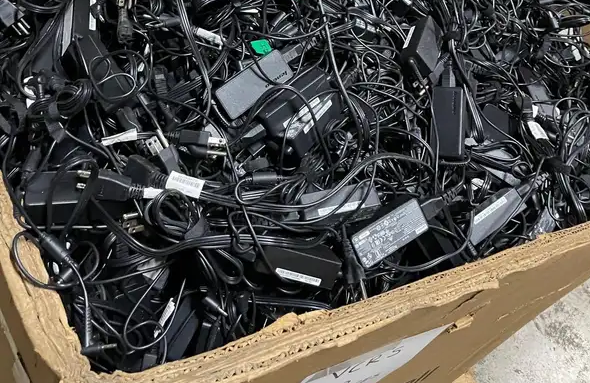
Also the chargers was ditched for the latest compact Surface models (Surface Pro 9). That is to comply with EU recommendations and is a really good idee. especially for me that have lots of laptops and tones of chargers. But same here, my Surface Laptop 7 came with the charger. So progress is made, but not in time for my purchase.
So… is it “sustainable”? Here´s where my Surface Laptop 7 actually lands
One laptop won’t clean up the Baltic Sea or decarbonize Europe’s grids. But the Surface Laptop 7 gives me real, verifiable improvements I can stand behind:
- Lower embodied carbon, backed by a full LCA and measurable reductions from recycled metals and cleaner supplier electricity.
- Low energy consumption in daily use, backed by the Eco Profile ~13 kWh/year estimate, making it easy to calculate real‑world emissions on your local grid
- Packaging and charging choices that cut waste, aligned with policy trends and practical fleet management.
- Company‑wide 2030 commitments and transparent annual reporting that give the device context.
Put together, the Laptop 7 meets my personal bar, not perfect, but provably better. And that’s what matters at fleet scale.
I’m keeping the recommendation.
About The Author